
Pitted coating, broken logos, uneven colour: diagnosing the 6 classic film-coating defects and fixing them for good
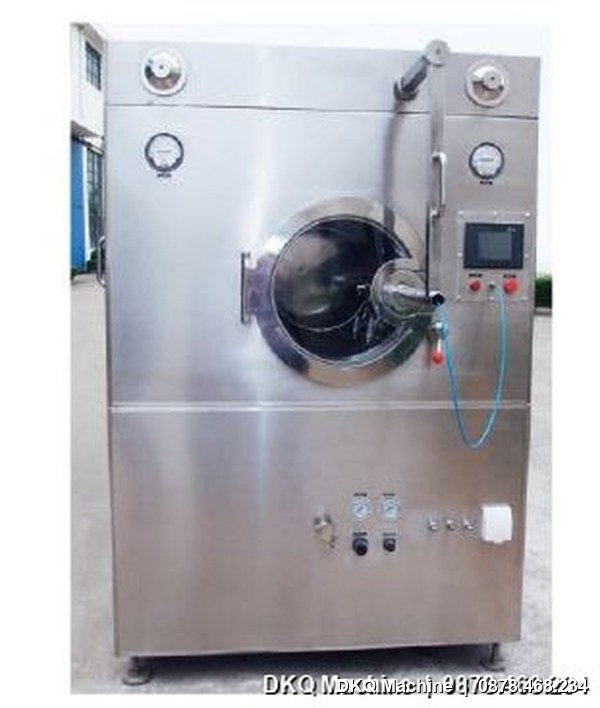
On any tablet line, the film-coating step is where problems surface most often. A 500,000-tablet batch can be rejected at IPC just because one spray parameter was wrong. After years of installing and commissioning coating equipment for pharmaceutical plants in Vietnam, we at DKQ have found that 70% of film-coating defects come from process parameters and equipment condition — not the coating formula. This article summarises the 6 classic defects, their root causes, and how to fix them.
The standard parameter window, before we talk about defects
For aqueous film coating with HPMC-based polymers on a high-efficiency perforated pan such as the BGB series, the typical operating window is: inlet air temperature 55–75°C, tablet bed temperature 38–45°C, spray rate 8–15 g/min per gun depending on pan size, atomising air pressure 1.5–3.0 bar, pattern air pressure 1.0–2.5 bar, gun-to-bed distance 15–25 cm, and pan speed 2–10 rpm depending on drum diameter. Two parameters are most often overlooked: compressed-air dew point ≤ 10°C (clean air per ISO 8573-1) and core moisture of 2.5–4% before coating.
The 6 classic defects: diagnosis and corrective action
1. Picking
Small patches are "picked" off the tablet surface, with residue building up on the spray guns and pan walls. The main cause is overwetting: spray rate exceeding drying capacity, guns too close to the tablet bed, or inlet temperature too low. Corrective action: reduce spray rate by 15–20%, raise inlet temperature by 3–5°C, move guns 2–3 cm further away, and re-check the spray pattern.
2. Orange peel
The film dries before it can level out, usually because the coating dispersion is too viscous or atomisation is too coarse. Corrective action: raise atomising air pressure by 0.3–0.5 bar, dilute the dispersion with 1–2% extra water, and increase pan speed slightly so tablets roll more evenly.
3. Logo bridging
Polymer film fills in the embossed logo or lettering. Causes include an overly thick dispersion, prolonged overwetting, or embossing that is simply too shallow — below 0.15 mm it is very hard to keep crisp. Corrective action: keep dispersion viscosity at 150–300 cP, increase drying temperature, and work with the compression team to deepen the embossing and its side-wall angle.
4. Cracking — hours or days after coating
The film cracks under stress: cores expand as they absorb moisture, the temperature gap between inlet air and the bed is too wide, or the formula lacks plasticiser. Corrective action: re-check core moisture before coating, avoid thermal shock during final cooling, and review the plasticiser level in the formula.
5. Colour variation
Uneven colour between tablets or across a single tablet, caused by misaligned guns, worn nozzles, pan speed set too low, or inconsistent hold times between batches. Corrective action: realign the guns, replace nozzles on schedule, and increase pan speed.
6. Twinning
Two tablets stick together when the early phase is overwetted or the pan turns too slowly. Corrective action: start spraying at 50–60% of the target rate for the first 20–30 minutes, then ramp up, and raise pan speed to the recommended level.
Three things to do now — from DKQ field experience
First, run a 3-factor DOE (spray rate, inlet temperature, pan speed) when scaling up from a 1–5 kg R&D pan to a 150–350 kg production pan — this is where most defects originate. Second, maintain the spray system by operating hours: check nozzle wear every 200 hours or at the end of each campaign, and clean the manifold right after every batch. Third, log full parameters for every batch and trend them — most coating failures announce themselves through the inlet/outlet air temperature gap and spray pressure before a batch is lost.
Film coating is a combination of heat, moisture, mechanics and atomisation. When a batch fails, do not rush to blame the formula — check the parameters, the spray assembly and core moisture first. DKQ supplies high-efficiency coating pans and auxiliary equipment for tablet lines — contact 0878.468.234 for advice on selecting equipment to match your plant scale.